Roofing Calculator
Estimate roofing squares and shingle bundles needed from roof dimensions.
Roofing Calculator: Estimate Roof Area, Squares, Shingles & Materials
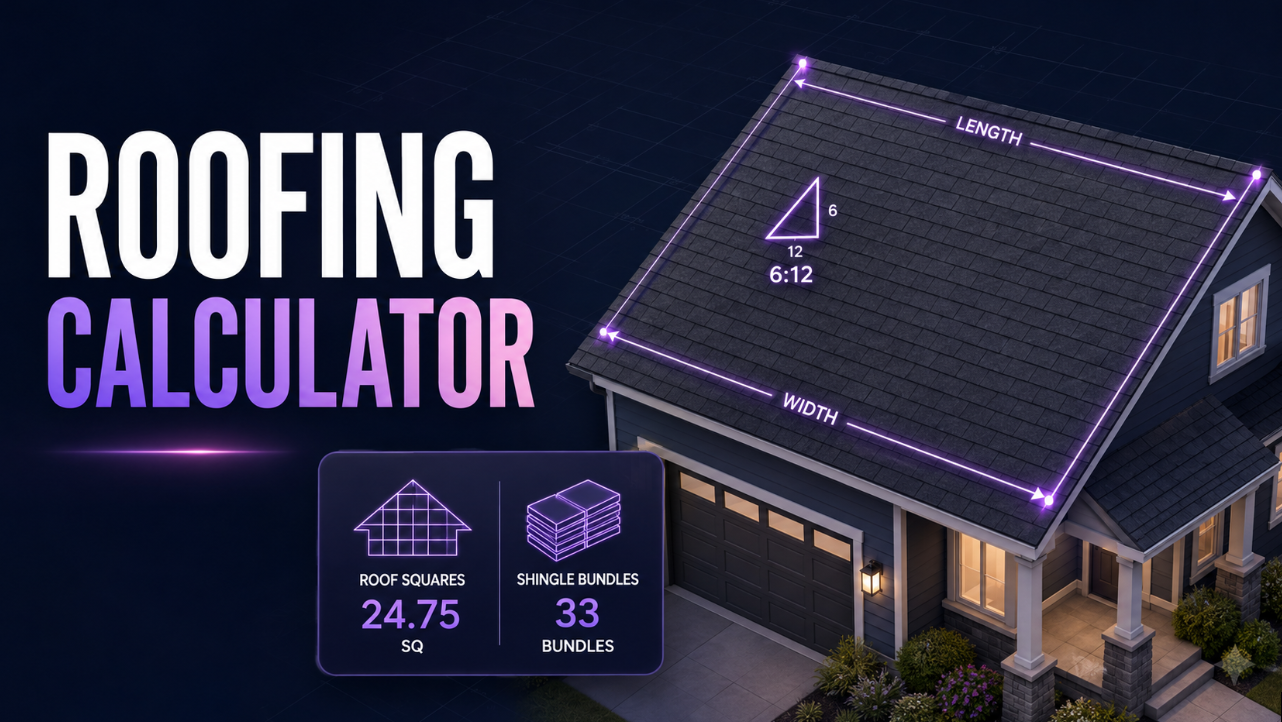
Use this roofing calculator to estimate the materials needed for a roof repair or replacement. Enter your roof sections, measurements, pitch, material coverage, waste allowance, and optional prices to get a practical preliminary estimate.
The calculator helps you estimate:
- Horizontal roof area and sloped roof area
- Roofing squares
- Shingle bundles, panels, sheets, or tiles
- Underlayment rolls
- Starter strips, ridge caps, and drip edge
- Waste allowance
- Preliminary material costs
A roofing square equals 100 square feet of roof surface. The calculator rounds material quantities up to complete purchasable units, helping you avoid planning for a fraction of a bundle or roll.
How the Roofing Calculator Works
A roof’s footprint is not always the same as its actual surface area. A pitched roof has more surface area than the building below it, so the calculator adjusts your measurements using the selected roof pitch.
The calculation follows this general process:
- Add the length and width of each roof section.
- Include overhangs and subtract areas such as skylights where appropriate.
- Calculate the horizontal roof area.
- Apply a pitch multiplier to estimate the sloped roof surface.
- Add your selected waste percentage.
- Convert the final material area into roofing squares and product units.
The basic estimate is:
Sloped roof area = Horizontal roof area × Pitch multiplier
Material area = Sloped roof area × (1 + waste allowance)
Your selected product coverage is then used to estimate bundles, panels, rolls, or tiles.
Roof Area vs. Roofing Squares
Roof area is usually measured in square feet or square metres. Roofing suppliers commonly use roofing squares for shingles and other materials.
1 roofing square = 100 square feet
For example, if your roof requires 1,500 square feet of material after pitch and waste adjustments:
1,500 ÷ 100 = 15 roofing squares
The calculator shows both measurements so you can compare your result with supplier estimates and product packaging.
How Much Waste Should You Add?
Waste covers cuts, damaged pieces, starter rows, valleys, hips, roof edges, and layout changes. The right amount depends on the roof shape, material, and installer’s method.
Useful starting points include:
- Simple gable roof: often around 10% waste
- Hip roof: often 10% to 15% waste
- Roofs with valleys, dormers, or multiple sections: often 15% to 20% waste
- Specialty materials or complex patterns: confirm the recommended allowance with the manufacturer or roofing professional
Waste is not a guaranteed amount. Roof geometry, product size, installation pattern, and local requirements can all affect the final quantity.
How Many Shingle Bundles Do I Need?
The number of shingle bundles depends on the coverage listed by the manufacturer. Do not assume every bundle covers the same area.
Enter the coverage per bundle shown on your product label or supplier listing. The calculator divides your adjusted roof area by that coverage and rounds up to the next whole bundle.
For example, a roof requiring 1,476 square feet of shingle coverage would need approximately:
1,476 ÷ 33.3 = 44.32 bundles
Because bundles are sold as whole units, you would plan for 45 bundles when each bundle covers 33.3 square feet.
Example: Simple Gable Roof Estimate
Suppose a home has a 40 ft × 30 ft simple gable roof with a 6:12 pitch and a 10% waste allowance.
- Horizontal roof area: 1,200 sq ft
- Estimated 6:12 pitch multiplier: approximately 1.118
- Estimated sloped area: approximately 1,342 sq ft
- Material area with 10% waste: approximately 1,476 sq ft
- Roofing squares: approximately 14.76
- Recommended purchase quantity: round up to 15 roofing squares
If the selected shingles cover 33.3 square feet per bundle, the estimate is approximately 45 bundles.
This is a planning example only. Add each roof section separately for more complex roofs, and use product-specific coverage for a more useful estimate.
Other Roofing Materials the Calculator Can Estimate
In addition to shingles or panels, a roofing project may require several accessories:
- Underlayment: installed beneath roofing material for added water protection
- Starter strips: used along eaves and sometimes rakes
- Ridge caps: cover roof ridges and hips
- Drip edge: installed along roof edges to guide water away from fascia and decking
- Flashing: often needed around chimneys, skylights, vents, and wall intersections
These estimates are helpful for early planning, but flashing, ventilation, fasteners, sealants, and local code requirements can vary significantly by roof design and material system.
Does the Estimate Include Labor?
No. This roofing calculator provides a preliminary material estimate. Labor, permits, disposal, delivery, taxes, deck repairs, ventilation work, structural repairs, and contractor overhead are separate costs.
Use the material estimate as a starting point when comparing quotes, then ask your contractor or supplier to confirm final measurements and product quantities.
Important Safety and Accuracy Notes
Roof measurements can be difficult and potentially dangerous. Do not climb onto a roof without suitable training, equipment, and safe conditions.
For the most accurate result:
- Measure each roof section separately
- Confirm pitch and overhang measurements
- Use the actual coverage listed by your manufacturer
- Add appropriate waste for valleys, hips, dormers, and complex areas
- Confirm final quantities with a roofing supplier or qualified roofing professional
This calculator is designed for preliminary project planning. Final material orders should be checked against product instructions, site measurements, local building requirements, and professional advice.
Roofing Calculator FAQs
What is a roofing square?
A roofing square is equal to 100 square feet of roof surface. It is commonly used to estimate shingles and other roofing materials.
Why is my sloped roof area larger than the house footprint?
A pitched roof extends upward at an angle, creating more surface area than the horizontal footprint below it. The steeper the pitch, the larger the difference.
How many bundles of shingles are in a roofing square?
It depends on the product. Many shingle products use multiple bundles per roofing square, but coverage varies by manufacturer and shingle type. Always use the coverage printed on the packaging.
Should I include waste in a roofing material estimate?
Yes. Waste helps account for cuts, edges, valleys, damaged pieces, and layout adjustments. Simple roofs may need less waste than roofs with multiple hips, valleys, dormers, or complex shapes.
Is this a final roof quote?
No. This tool provides a preliminary material estimate. Confirm final quantities, installation requirements, and total project costs with a supplier or qualified roofing professional.